Noel De Souza, the hidden Indian on the Hollywood studio lot
From bit parts in films and shows to chatting with the stars, the centenarian has had quite the journey.
He isn’t as known as the Indians who made a name for themselves in Hollywood – Sabu Dastagir, the Amritraj brothers, Irrfan, Priyanka Chopra Jonas. But Noel De Souza was around before most of them, both as a journalist and a small-time actor in shows, films and commercials.
De Souza was India’s point man in Hollywood for years for Times of India, Mid-Day, Cine Blitz, iDiva and Open. Before journalism, De Souza pursued acting at a time when Hollywood heavily exoticised India and cast white actors in Indian roles.
The centenarian, who recently wrote a novel, stopped reporting around 2019. Speaking of his early days in Hollywood, the Los Angeles resident said, “There weren’t any other Indian journalists around, at least none that I was aware of.”
He’s interviewed Tom Cruise, Steven Spielberg, Brad Pitt, Quentin Tarantino, Martin Scorsese, Hugh Grant, Meryl Streep, Nicole Kidman, Christopher Nolan and Julia Roberts. He spoke to Leonardo DiCaprio in 1996, when DiCaprio was 22 years old and on the cusp of global stardom with Titanic.
“I always tried to get in a bit of their [the stars’] personal lives,” De Souza recalled. “The studio would want you to plug the film, which I thought was very dull. I myself would not read that kind of interview. So I would go into their personal lives and ask them how they identified with the characters, something about their family.”
De Souza is 100 years old, with failing eyesight and hazy memories about his journey. He was born on December 27, 1925, in Secunderabad. “As children, we went to the Odeon, Plaza and Dreamland cinemas in Hyderabad,” he recalled. “I was mesmerised by Esther Williams in her water ballets, Fred Astaire and Ginger Rogers dancing, Errol Flynn fencing. I’d think, why am I not up there? Not for a minute imagining I looked any different.”
Indian cinema did not tempt him in the same way. “I did watch Hindi films, but that cinema didn’t interest me very much because it was over the top,” he said. “There was no tenderness in romance. They were running around trees. This is not reality. So I never tried it.”
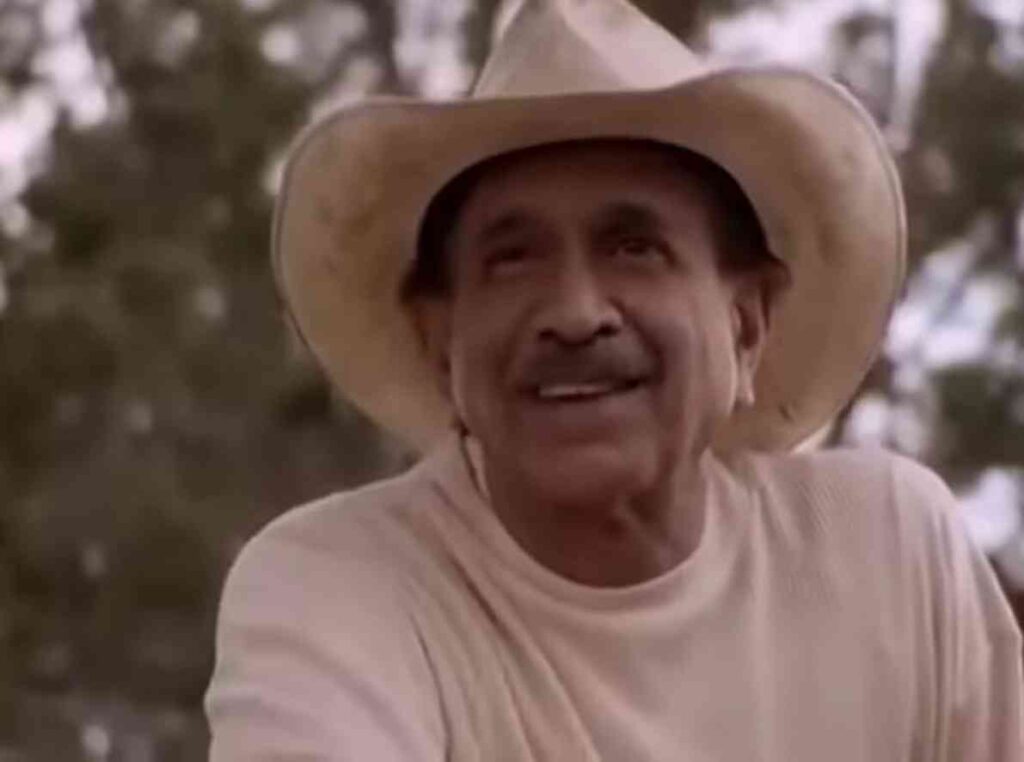
In the 1940s, De Souza moved to the United States to study architecture at the University of California in Berkeley. He then relocated to Los Angeles, where he took an acting course. That led to his first television job in 1955, in The Loretta Young Show. De Souza was paid 750 dollars to play a tutor in a single scene in the episode I Remember the Rani.
His next role was in the Johnny Weissmuller–led Jungle Jim TV show in 1955. With the help of an agent, De Souza’s fee went up to 1,000 dollars.
De Souza’s struggle continued until he attended a free acting course by Anthony Quinn. The legendary Mexican-American actor advised De Souza to audition for Latino roles. “He told me, most of the people interviewing me didn’t know Spanish either, so I just needed to get the melody and rhythm right and say whatever I wanted.”
Although De Souza’s Spanish was limited, he followed Quinn’s counsel. “I would say that my father was from Brazil or Mexico and my mother from Venezuela or Argentina – I made it up,” De Souza said. “I had an advantage. I could play Arabs, Mexicans, Native Americans and Indians. Though the parts were not very big, I could play many characters.”
This was survival. Casting directors didn’t know what to do with an Indian face unless it fit a stereotype. “They thought I should be wearing a lungi or something,” De Souza joked. “When they would ask where my costume was, I’d usually say it’s hanging as a window curtain at the moment.”
He played Paco in an episode in the popular TV show Zorro (1957). He was in bit parts in Mission: Impossible, The Man from U.N.C.L.E. andBeachcomber, and movies such as Somewhere and Wedding Crashers. He also appeared in commercials.
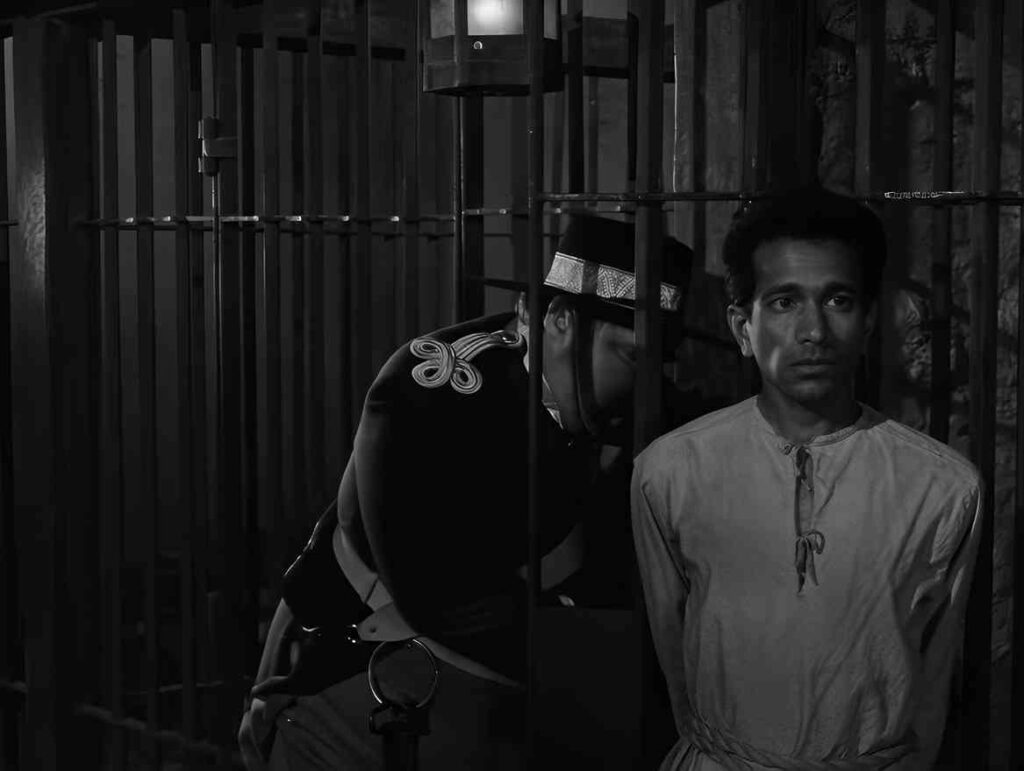
For Zorro, he endured repeated takes while leaping onto a horse. “They put pieces of cut tires on my elbows and knees to protect them because I kept slipping off Zorro’s satin cape,” he said. “That scene took at least five takes.”
One time, a casting director challenged De Souza’s Latino ethnicity. She told De Souza, you can’t be Mexican or Argentinian, your ears give you away. “I have long ears, but I guess that helped me get the part of Mahatma Gandhi in Star Trek: Voyager,” De Souza said.
Among De Souza’s cherished projects is the TV movie Unabomber (1996) in which he played Juan Sanchez Arreola, a Mexican friend of the American terrorist Ted Kaczynski. The roles were minor but the work was steady. “It was very difficult sometimes, but residuals from commercials keep actors afloat. It helped me pay for my medical insurance,” De Souza said.
De Souza’s resume doesn’t capture the human connections. He once met producer Stanley Rubin for a planned film. In Rubin’s office, De Souza noticed a photograph of a woman he identified as Kathleen Hughes, having seen her in a film. Rubin called Hughes – his wife – and handed De Souza the phone. She invited De Souza to dinner. That dinner became six decades of friendship, even though the film never got made.
In 1967, De Souza became a filmmaker himself. He co-wrote and co-directed with Yehuda Tarmu the short film Boy of Bombay, about a child from a slum in Mumbai.
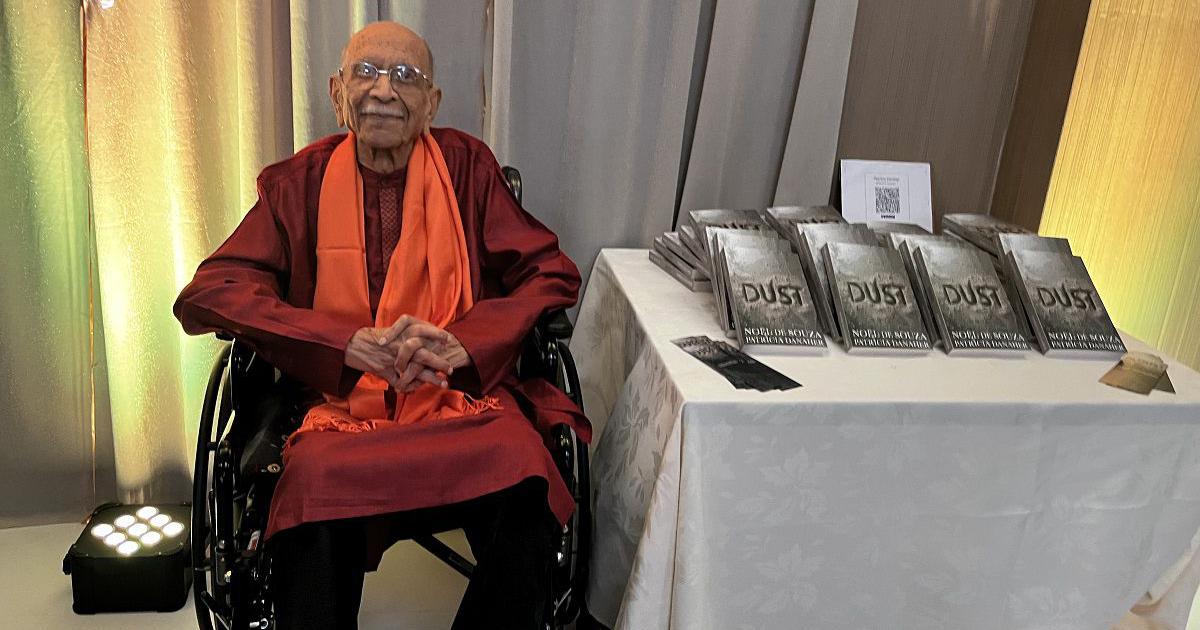
In the 1970s, De Souza wrote a screenplay titled The Bullpen. The unfilmed script inspired the novel Dust, which De Souza co-authored with Patricia Danaher in 2025.
Dust is set in 1950s Oklahoma and follows factory worker Seth Manton navigating industrial hardship and relationships. “During one conversation, as he was nearing 100, he told me he wanted to leave behind a novel,” Danaher told Scroll. “He had written extensively in his youth, including short stories and screenplays, many of which were lost. But The Bullpen meant a great deal to him.”
She found the yellowing manuscript in his dimly lit home, and they reworked it together. “I took it on as our joint project,” Danaher said. “We rethought and expanded it, using AI as a structural tool to transform the dialogue-driven screenplay into a fully realised novel. Because of his eyesight, I converted chapters into audio for his review. With his milestone birthday looming, we pushed intensely to finish the book, honouring what was always, fundamentally, Noel’s story.”
Danaher and De Souza first met at the Hollywood Foreign Press Association, was best known for organising the Golden Globes awards (in 2023, HFPA was rebranded as the Golden Globe Foundation).
At HFPA, De Souza worked behind the scenes, sending handwritten invitations and poring over seating plans for the Globes. The annual awards gave him a ringside view into how Hollywood worked – actors would befriend journalists only around the time of nominations and ignore them otherwise, he said.
One of the exceptions was Angelina Jolie: “You could talk to her about her immense charity work and her humanity. She’s a lovely and caring person. Others just played up to you because of the Globes.” But the events were chaotic and joyful too – seating arrangements were diplomatic puzzles because former spouses could not sit near one another.
De Souza also observed how Indian cinema and actors were received in America. One Indian film was submitted to the Oscars without subtitles – “a daunting task.” The situation has vastly improved since.
“I’ve seen a lot of Indian films and some of them are very good,” De Souza said. “The characters are defined and the situations are very real. And there’s a lot of visibility for Indians, such as Mindy Kaling and Priyanka Chopra.”
It’s a fry cry from when, several decades ago, De Souza had to sit outside Cary Grant’s office for hours to arrange a meeting between Grant and the Indian comedian Mehmood.
In the 1970s, De Souza leveraged his contacts in Hollywood for a side career as a freelance journalist. Starting with Cine Blitz, he interviewed Hollywood luminaries for a host of publications. “I didn’t feel any different to any other journalists at the time, nor did I face any prejudice,” he said. “It would have helped that my accent was not very different because I had studied in Ooty.”
Those were simpler days, when interviews took place in the studio commissary over a lunch break. “At that time, the studios had their own publicity team and it was easier to get a one-on-one,” De Souza said. “You could just walk onto a set or reach stars directly.”
De Souza’s story is less about marquee moments than about persistence in an industry that rarely promises permanence. From re-recording dialogue for The X-Files to advising productions about the authenticity of Indian characters, De Souza took whatever work kept him in the room.
Would he like to see Dust as a film?
De Souza is pragmatic. “You can’t talk about a film till there is money,” he said. “I don’t think I will live long enough to see a film made. I am going on 101, and my heart doctor says I will live to 102.”
Scroll welcomes your comments at letters@scroll.in.